Jebel Faya: History, Guided Tours & How to Visit
Stone tools recovered from a rock shelter on Jebel Faya show people living in this corner of Sharjah about 210,000 years ago, and since July 2025 the surrounding Faya Palaeolandscape has been a UNESCO World Heritage Site.
You can’t park at the foot of the ridge and walk in. The shelter and the caves sit inside a protected zone, so visits run as guided tours that start at the Mleiha Archaeological Centre.
The ridge is about 50 km east of Sharjah city, roughly 50 minutes by car. This guide covers what the site proves, what the tour shows, what it costs and how to get there.
Jebel Faya quick details
| Detail | Information |
|---|---|
| Location | Al Faya, Central Region of Sharjah, near Mleiha |
| Distance from Sharjah city | About 50 km east, around 50 minutes by car |
| Ridge size | About 10 km long and 2 km wide |
| Highest point | 412 m (1,352 ft) |
| Main excavation | FAY-NE1 rock shelter at the north-eastern end |
| Occupation span | About 210,000 to 6,000 years ago |
| World Heritage listing | Faya Palaeolandscape, reference 1735, inscribed 2025 under criteria (iii) and (iv) |
| Protected area | About 95,000 hectares: 30,000 core zone and 65,000 buffer zone |
| Gateway | Mleiha Archaeological Centre |
| Access to Faya sites | Guided tour only |
Why Jebel Faya matters
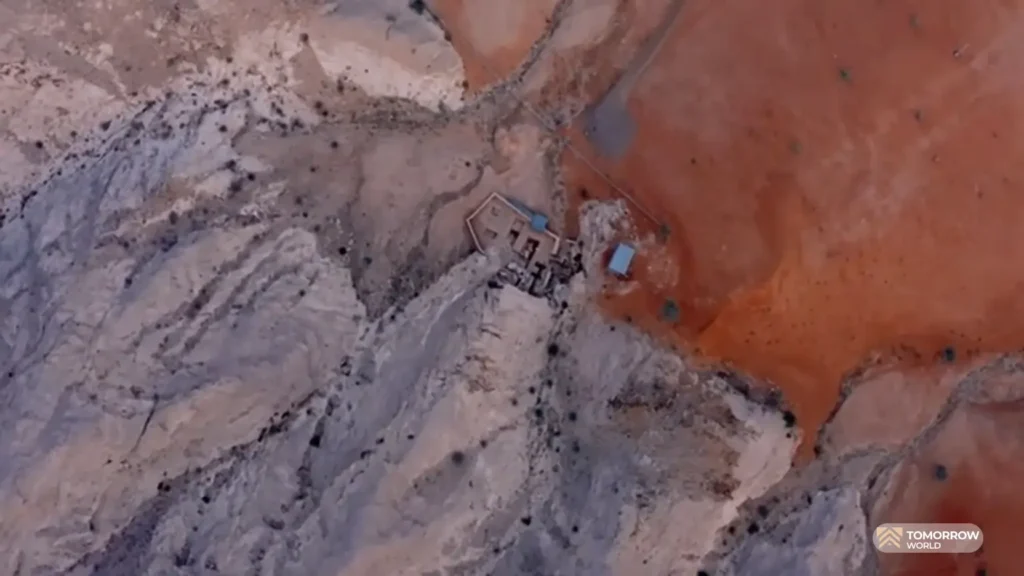
Jebel Faya matters because its layers show repeated human presence in south-east Arabia far earlier than older migration models allowed. Excavations in 2009 dated occupation to 125,000 years ago, which made it the oldest known human site in Arabia at that point. The excavation team links the toolmakers of that period to anatomically modern humans on an early southern route out of Africa, though other researchers dispute that identification.
A 2022 study in Scientific Reports pushed the record back. Researchers from the Sharjah Archaeology Authority and the universities of Tübingen, Freiburg and Oxford Brookes reconstructed four phases of occupation between roughly 210,000 and 120,000 years ago.
UNESCO added the Faya Palaeolandscape to the World Heritage List at its 47th session in July 2025. It is the first desert Palaeolithic site on the list, the second World Heritage site in the UAE after the Cultural Sites of Al Ain (2011), and the only Arab site inscribed that year.
Occupation timeline
The sequence runs from the Middle Palaeolithic to the Iron Age:
- About 210,000 years ago: the earliest occupation, with too few finds to classify the tools.
- About 170,000 years ago: people present during a period long assumed to be too dry for settlement.
- About 125,000 years ago: small handaxes, foliates, end scrapers and sidescrapers.
- 120,000 to 90,000 years ago: sidescrapers and denticulates.
- About 80,000 years ago: elongated blades and Levallois-style tools.
- About 9,500 years ago: Faya points, flint arrowheads that mark the first reoccupation after the last Palaeolithic abandonment.
- Later periods up to the Iron Age: wadi caves used for flint-knapping and burials.
Most Palaeolithic layers were dated with single-grain luminescence dating, and the late layer with radiocarbon on marine shell. A French team first test-excavated the shelter in the 1980s. Systematic work began in 2003 with the Sharjah Archaeology Authority and the University of Tübingen, the first stratified Palaeolithic material came in 2006, and excavation continued until 2017.
More than 35,000 stone artefacts have been recovered from the shelter and the terrace in front of it.
What the landscape shows
Climate in the Faya area swung between wet and dry phases roughly every 20,000 years, and people lived here through both. The 2022 data showed that short wetter spells inside otherwise arid periods were enough to make the area habitable.
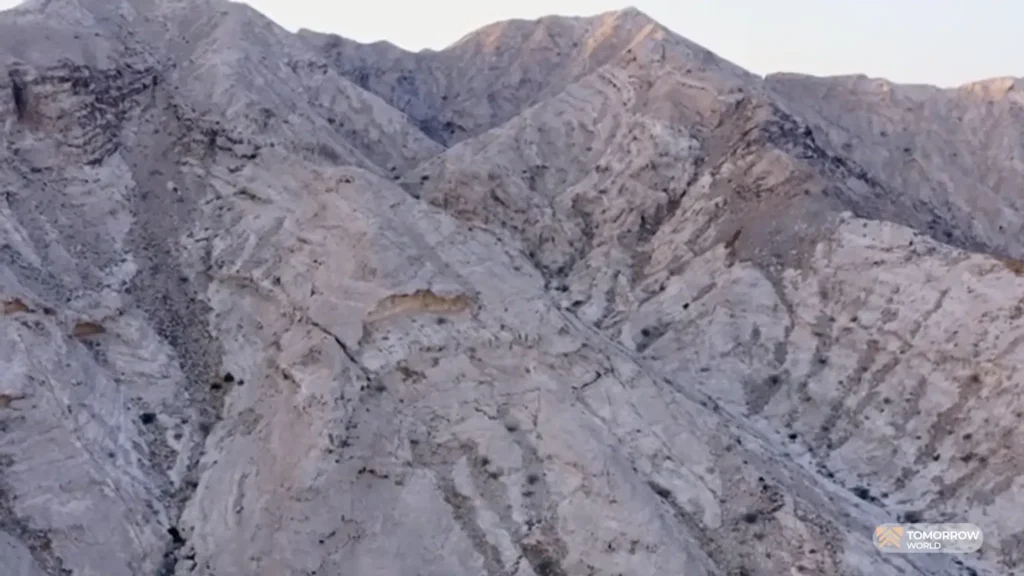
Water and stone explain why. Palaeolakes formed between Jebel Faya and the neighbouring Jebel Aqabah and Jebel Mleiha, the wadis carried seasonal water, and the limestone supplied raw material for tools. Hunters here took wild goats, oryx, camels and aurochs.
The ridge itself is part of a chain of limestone outcrops about 20 km long, formed more than 90 million years ago. Shells and other marine fossils are still embedded in the rock.
What you see on the tour
The tour takes in the rock shelter, a set of wadi caves and a viewing platform, with fossils along the way:
- Faya 1: a collapsed rock shelter of hardened limestone, with a ladder down to the buried surfaces where the stone tools were found.
- Faya 15: a former spring site with an excavation trench showing ash bands from ancient fireplaces.
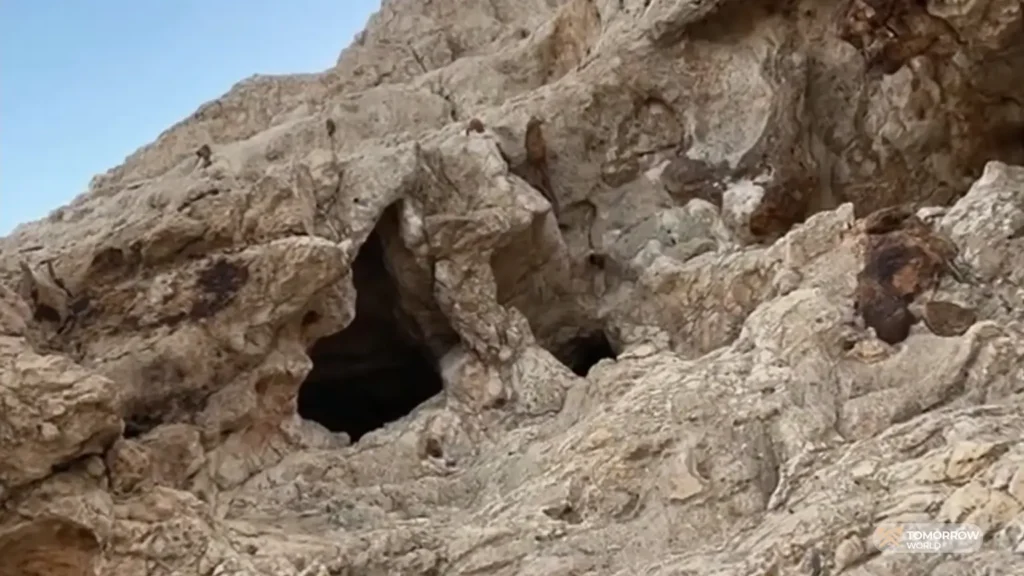
- Faya 10: a flint-knapping workshop that later became a ritual site for cremated remains, the oldest found in south-east Arabia.
- Faya 9 and 11: burial caves used in the Iron Age and late pre-Islamic periods.
- Viewing platform: at the top of the mountain path, overlooking three of the caves.
Guides pour water over the limestone to bring out the marine fossils, which are hard to spot when the rock is dry. Some artefacts are displayed at the Mleiha Archaeological Centre, which is worth the time before or after the tour. Buhais Geology Park, with its own interpretive centre, also lies inside the palaeolandscape.
Tickets, hours & tour prices
Centre entry is AED 25 for adults, and the Archaeological Tour that reaches the Faya caves is AED 190 per adult.
| Item | Price |
|---|---|
| Centre entry, adult | AED 25 |
| Centre entry, child 10 and under | AED 15 |
| Centre entry, child under 5 | Free |
| Family entry (2 adults, 3 children) | AED 75 |
| Archaeological Tour, adult (includes centre entry) | AED 190 |
The centre is open Saturday to Wednesday from 9:00 am to 7:00 pm, and Thursday and Friday from 9:00 am to 9:00 pm.
Reserve the Archaeological Tour on the Mleiha tour booking page before you set off. The tour is recommended for ages 5 and above, and a child ticket must be booked with an adult.
How to get there
The drive is straightforward and the roads are paved all the way to the centre:
- Book your tour slot online.
- From Sharjah city, take the E88 Sharjah–Dhaid road or the E102 Sharjah–Kalba road toward Mleiha. The distance is about 50 km.
- Set your navigation to Mleiha Archaeological Centre, or use the map pin for Jebel Faya for the ridge itself.
- Park at the centre and check in at the front desk. Your guide takes you into the site from there.
A standard sedan reaches the centre without trouble. The off-road sections of the tour run in the centre’s own vehicles. The centre can arrange transfers at an extra charge, and driving yourself is simpler for most visitors.
Best time & what to bring
November to March is the best window, with mild weather for the cave and ridge walking. Arrive between 9:00 and 11:00 am for the coolest conditions. From May to September, midday heat makes the exposed sections hard going, so book the earliest slot.
Bring:
- Plenty of drinking water
- Sturdy closed-toe walking shoes for rocky ground
- A hat and sunglasses
Site rules are short. Stay on the guided route, and don’t collect or disturb rocks, fossils or artefacts. Off-road driving outside the tour vehicles isn’t allowed.
FAQ
Can you visit Jebel Faya without a tour?
No. Visits to the Faya shelter and caves are organised through the Mleiha Archaeological Centre, which controls access to protect the excavation areas. You can walk the centre and its exhibits on an entry ticket alone.
How old is Jebel Faya?
Human occupation at the site spans about 210,000 to 6,000 years ago. The oldest stone tools date to about 210,000 years ago.
Is Jebel Faya a UNESCO World Heritage Site?
Yes. The Faya Palaeolandscape was inscribed in July 2025 under criteria (iii) and (iv), and Jebel Faya is its best-known ridge.
How far is Jebel Faya from Sharjah city?
About 50 km east, which is roughly 50 minutes by car.
Is the Jebel Faya tour suitable for children?
The Archaeological Tour is recommended for ages 5 and above. Children under 5 enter the centre for free.
Plan your visit
Four things settle most of the planning:
- Pick a day between November and March and book the morning tour slot.
- Budget AED 190 per adult for the Archaeological Tour, which already includes centre entry.
- Drive to the Mleiha Archaeological Centre, about 50 minutes from Sharjah city, rather than to the ridge.
- Pack water and closed shoes, and leave every stone, fossil and artefact where it lies.