Al Madam Buried Village: Directions, Gate Hours & What to Expect

Al Madam Buried Village now has a fence, a guard at the gate and a car park outside. Visitors leave the car, walk in through a staffed entrance, and spend an hour or two among houses that the dunes are slowly filling.
The village sits in the desert south of Al Madam town in the Emirate of Sharjah, about 60 km from Dubai. Entry costs nothing, and a regular car is enough to reach it.
Below you’ll find the route, the gate hours, what you can and can’t enter, and how the village ended up half-buried in the first place.
Al Madam Buried Village quick details
| Detail | Information |
|---|---|
| Also called | Ghuraifa village, Madam Old Town, Al Madam Ghost Village |
| Location | Desert south of Al Madam town, Emirate of Sharjah |
| Distance | About 60 km from Dubai and 50 km from Sharjah city, roughly an hour from either |
| Entry fee | Free, no ticket or booking |
| Gate hours | 9 am to 5 pm |
| Vehicle | Regular car to the car park, no 4×4 needed |
| Time on site | 1 to 2 hours |
| Best season | October to March |
| Facilities | A guard at the gate, no shops, food or toilets |
| Coordinates | 24.8948° N, 55.7636° E |
Directions from Dubai & Sharjah
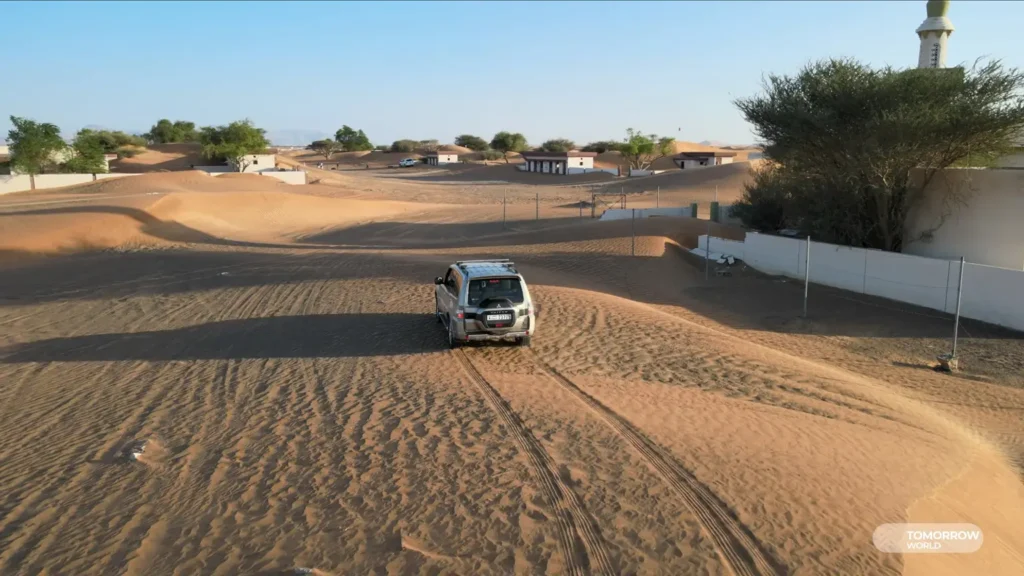
From Dubai, take Emirates Road (E611), join the Dubai-Hatta Road (E44) and follow it to Al Madam. The drive takes about an hour. From Sharjah city the distance is roughly 50 km.
- Drive to the Al Madam junction, where E44 meets the Mleiha-Shwaib Road (E55).
- Set your navigation to the Al Madam industrial area first, not to the village itself. A village pin entered directly can send the route across soft sand.
- Leave E55 at the junction for the industrial area and follow that road straight to its end.
- Turn right at the end of the road. The last stretch is bumpy and not fully paved, but ordinary cars manage it.
- Park in the car park in front of the gate. Once you are in the industrial area, open the village location pin to confirm the final turn.
Regular car or 4×4
A regular car is enough because the road ends at a car park outside the fence. Soft sand starts beyond it and traps ordinary cars, so stay on the road. Dune driving around the village is work for 4×4 operators who do it daily.
Taxi, public transport & tours
No public transport runs to the village. A taxi from Dubai or Sharjah will take you there, but return cabs are scarce, so agree a waiting fee with the driver for your 1 to 2 hours on site.
Private guided tours leave from Dubai hotels in 4×4 vehicles and run about 4 hours, with roughly 2 hours at the village. Desert safaris that add dune bashing and a Bedouin-style camp treat the village as one stop, which means less time among the houses.
Gate hours & best time to go
The gate is staffed from 9 am to 5 pm, and the guard closes it at the end of the day. Plan to be back at your car before 5.
The gate shuts before sunset in every season, so the low light between 3 and 5 pm is the window for photographs. To get two full hours inside, arrive by 3 pm. For a 9 am arrival from Dubai, leave by 8 am.
October to March is the comfortable season for walking the site. In summer the village is open sand with no shade, and a 9 am start is the only workable slot.
What you’ll see inside
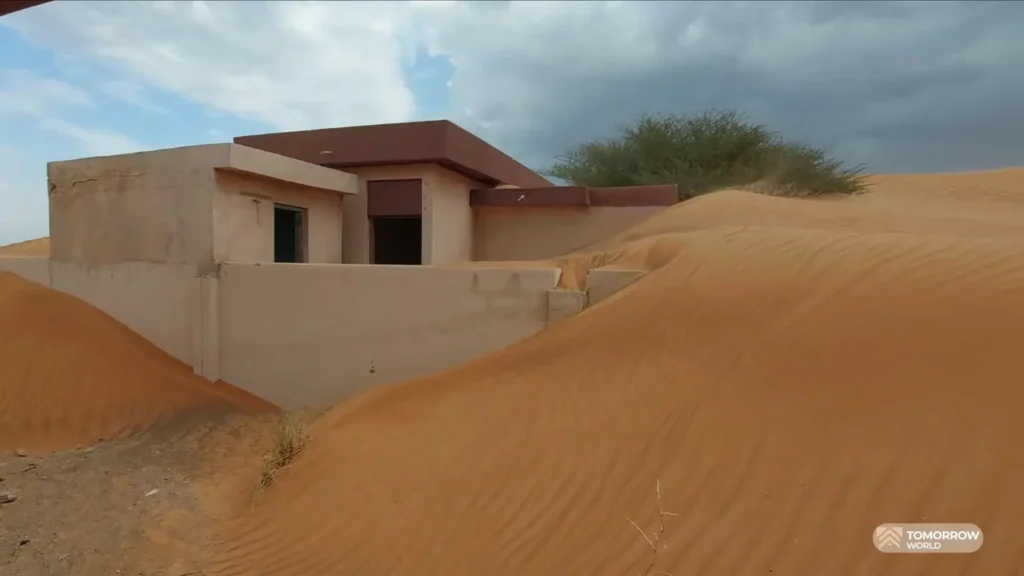
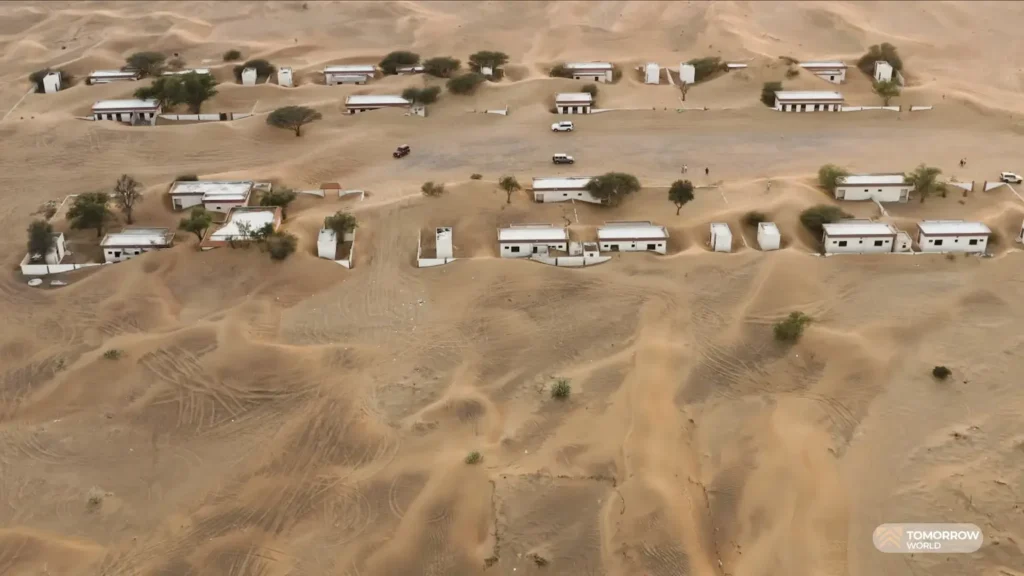
The village is two rows of identical houses facing each other along one road, with a mosque at the far end. All of it is single-storey and low enough that the dunes have reached the rooflines in places.
- Some interiors still show wallpaper, ceramic tiles, decorative flooring and wall paintings, many in blues and greens.
- In some houses the sand reaches the ceiling, and those rooms can’t be entered. A few buildings are buried so deeply that their windows now sit at roof level.
- Rusted iron gates still hang at several doorways.
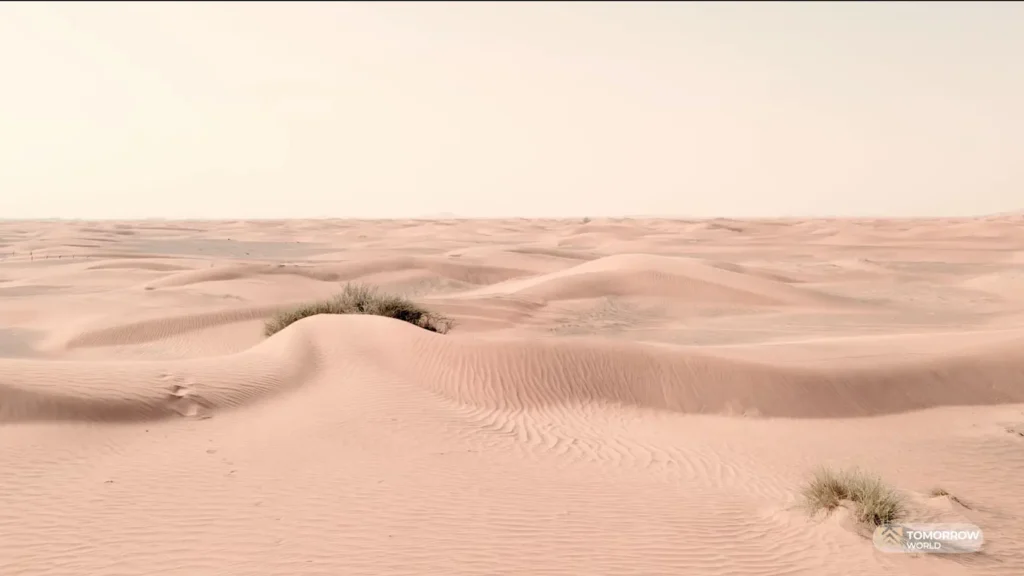
- Beyond the last house the sand rolls out in every direction, broken by a few scattered trees.
Many of the houses can be entered through their doorways. The mosque is the easiest landmark to find, since it stands at the end of the road.
Safety on site
Stay off the roofs and the weathered walls. They are old, cracked and unstable.
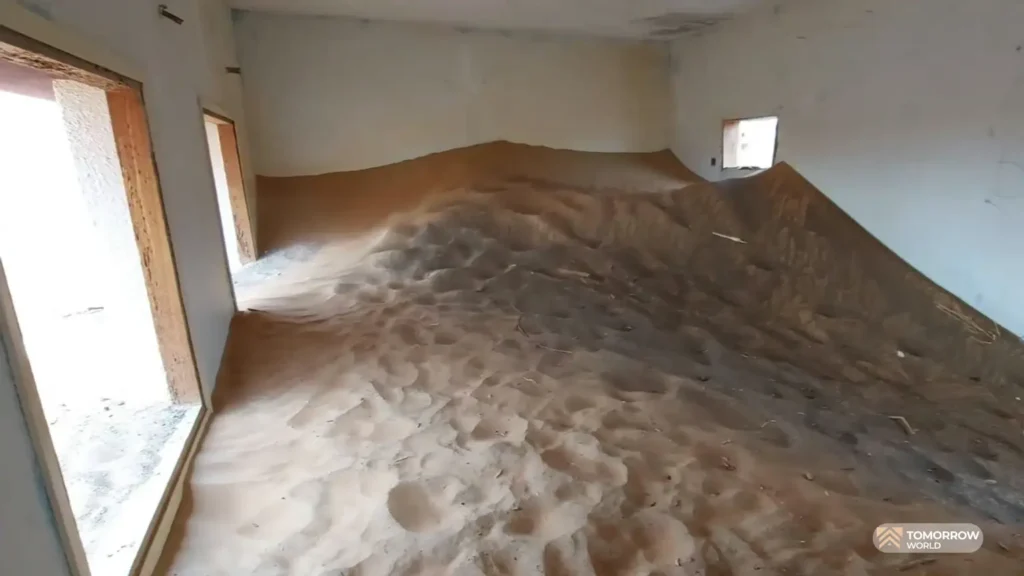
- Wear closed-toe shoes. Sand hides broken glass and debris inside and around the houses.
- Bring your own water and sun protection, because there is no shop, food stall, toilet or drinking water on site.
- Keep to the road and the car park, where the ground is firm.
- Don’t push into rooms that are packed with sand to the ceiling.
- Finish before the gate closes at 5 pm, since the village is a daylight visit.
How the village ended up buried
The village was built in the 1970s as part of the public housing programme that followed the formation of the UAE in 1971. It was meant to settle semi-nomadic Bedouin families of the Al Ketbi tribe in permanent homes.
Residents left about two decades later. A former resident recalls that the houses faced the eastern winds that blow through the summer months, and that more sand piled against them each year. Sand encroachment is the documented reason the village emptied.
Local folklore adds a second story, blaming jinn for driving the families away. The tale is a big part of why the site picked up its ghost-village nickname.
The Ruler of Sharjah issued a directive in July 2023 to preserve the village and prepare it for visitors, ordering the Al Madam Municipal Council and Sharjah Municipality to work together on it. A University of Sharjah research team has been studying the houses as a record of the UAE’s modern settlement history. The fence, guard and car park came out of that work.
Nearby stops
Al Madam works as one stop on a longer desert day. Three places sit within easy reach:
- Mleiha Archaeological Centre, about half an hour’s drive up the Mleiha road, covers the area’s Iron Age settlements and earlier history.
- Fossil Rock (Jebel Maleihah) is a short drive from Mleiha and suits a short walk.
- Badayer, known for dune bashing and the Big Red dune, is about 45 minutes from Downtown Dubai and sits on the way out from the city.
FAQ
Is Al Madam Buried Village free to visit?
Yes. There is no ticket and no booking. The only cost is getting there.
Do you need a 4×4 to reach Al Madam Buried Village?
No. A regular car reaches the car park outside the gate. The sand beyond the car park is soft, so stay on the road.
What time does Al Madam Buried Village open & close?
The gate is staffed from 9 am to 5 pm. Arrive by 3 pm if you want two hours inside.
How far is Al Madam Buried Village from Dubai?
About 60 km, or roughly an hour’s drive, via Emirates Road (E611) and the Dubai-Hatta Road (E44). From Sharjah city it is about 50 km.
Can you go inside the houses?
Many of them, yes. Rooms filled with sand up to the ceiling can’t be entered, and the roofs and weathered walls should be left alone.
Is Al Madam Buried Village haunted?
The jinn stories are local folklore. The documented cause of the village’s abandonment is sand blowing in from the dunes, and the site itself is quiet and calm in daylight.
What should you bring to Al Madam Buried Village?
Water, sun protection and closed-toe shoes. The site has no shop, food, toilet or drinking water.
Before you set off
The village is among the easiest half-day desert trips from Dubai or Sharjah: free entry, a regular car, and an hour or two on foot.
- Leave by 8 am for a morning visit, or by 2 pm for the 3 pm photography window.
- Navigate to the Al Madam industrial area first, then follow the road to its end and turn right.
- Pack water, sun protection and closed-toe shoes before you leave the city, since nothing is sold on site.
- Be back at the car park before 5 pm, and add Mleiha if the day has room.