
Central Souk (Blue Souk) Sharjah: Hours, Shops, Parking & How to Get There

The building printed on the back of the UAE’s 5-dirham note is a working market you can walk into for free. Sharjah’s Central Souk, known to most people as the Blue Souk and officially as Souk Al Markazi, has traded on the edge of Khalid Lagoon since 1978.
It holds more than 600 shops across two long buildings joined by footbridges. The ground floor leans toward gold, watches and clothing, and the upper floor toward carpets, antiques and handicrafts. Shops open in two sessions with a long afternoon break, so the time you arrive matters more here than at any mall.
Blue Souk basic information
| Detail | Information |
|---|---|
| Official name | Souk Al Markazi (Central Souk) |
| Common names | Blue Souk, Blue Souq, Central Souq |
| Location | King Faisal Street, Al Majaz, Sharjah, on the Khalid Lagoon waterfront |
| Opened | 1978 |
| Size | About 80,000 sq m, two buildings on two levels |
| Shops | 600+ |
| Entry | Free |
| Hours (Sat to Thu) | 9:00 AM to 1:00 PM and 4:00 PM to 11:00 PM |
| Hours (Friday) | 9:00 AM to 12:00 PM and 4:00 PM to 11:00 PM |
| Parking | Municipal paid parking around the souk, AED 2 for the first hour |
| Nearest bus hub | Al Jubail Bus Station |
What the Central Souk is

The Central Souk is Sharjah’s largest covered market and one of the most recognisable buildings in the UAE. It was designed by a British architecture firm working from ideas set out by the Ruler of Sharjah, Sheikh Dr Sultan bin Mohammed Al Qasimi, and finished in 1978.
The design scales up a traditional Arabian market. Two parallel wings run under barrel-vaulted roofs trimmed in blue tile, and 20 wind towers line the skyline. Before central air conditioning was installed, those towers did the cooling work, pulling breezes down into the shopping lanes.
When it opened, shoppers drove in from Dubai and Abu Dhabi for fabrics and textiles that were hard to find elsewhere. Malls have since taken much of that trade, and footfall is lower than in its early decades, but the souk remains a busy stop for gold, carpets and souvenirs.
The building has also had recent care. In 2025, Sharjah City Municipality carried out a comprehensive maintenance programme on the souk to extend the building’s life. The work covered architectural, civil and electromechanical repairs, repainting of internal and external walls, new glass and wrought iron on the windows, and a reorganised rainwater drainage system.
Opening hours & entry
Entry to the Blue Souk is free. You only pay for what you buy.
| Day | Morning session | Evening session |
|---|---|---|
| Saturday to Thursday | 9:00 AM to 1:00 PM | 4:00 PM to 11:00 PM |
| Friday | 9:00 AM to 12:00 PM | 4:00 PM to 11:00 PM |
Most shops pull their shutters down between 1:00 PM and 4:00 PM, and on Friday the break starts at noon for Friday prayers. Arriving at 2:00 PM means walking past rows of closed units.
Pick your session by what you want:
- Morning (9 AM to 1 PM): quieter lanes, easier parking, and shopkeepers with time to talk prices.
- Evening (4 PM to 11 PM): the full range of shops open, more atmosphere, and the blue tiles lit up after dark. Thursday and Friday evenings are the busiest.
Shops & goods inside
The ground floor carries modern jewellery, watches and fashion, while the upper floor holds the traditional goods most visitors come for.

| Area | What you’ll find |
|---|---|
| Ground floor, lagoon side | Gold, diamonds, precious stones and traditional Bedouin jewellery |
| Ground floor, general | Watches, clothing, abayas and scarves, footwear, perfumes, electronics, cosmetics, household goods |
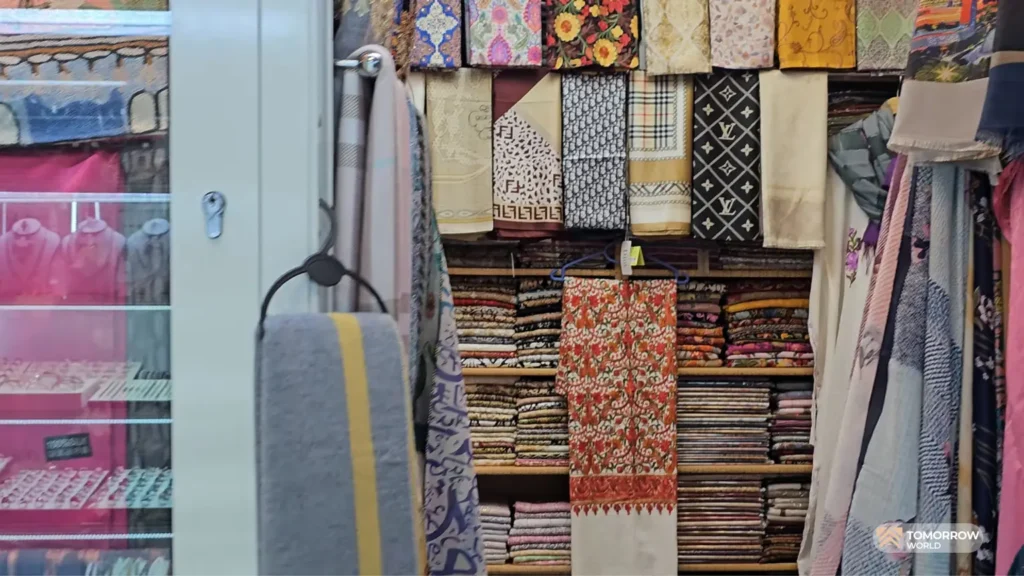
| Upper floor | Carpets and kilims, pashminas and handwoven textiles, antiques, brass coffee pots, silverware, Omani and Yemeni jewellery, curios |
| Throughout | Souvenirs, local trinkets, handmade toys and small cafés |
Gold & jewellery
Gold in the souk is sold by weight at the day’s market rate, plus a making charge for the craftsmanship. The weight price is fixed by the market, so any discount comes from the making charge. Some jewellers on the lagoon side can make a piece from a sketch you bring in, which is useful if you want a design you can’t find on the shelf.
Carpets, antiques & crafts
The upper floor is where you find hand-knotted carpets, kilims, pashminas and older pieces such as coffee pots, silver jewellery and daggers. Prices here move the most in negotiation. Ask the seller about the carpet’s origin, knot type and whether it is handmade or machine-made before you start talking numbers.
Everyday shopping
A good share of the ground floor serves residents rather than tourists. Abayas, scarves and shoes are sold in quantity at prices well below mall shops, which is why the souk stays busy with locals on weekday evenings.
How to reach the souk
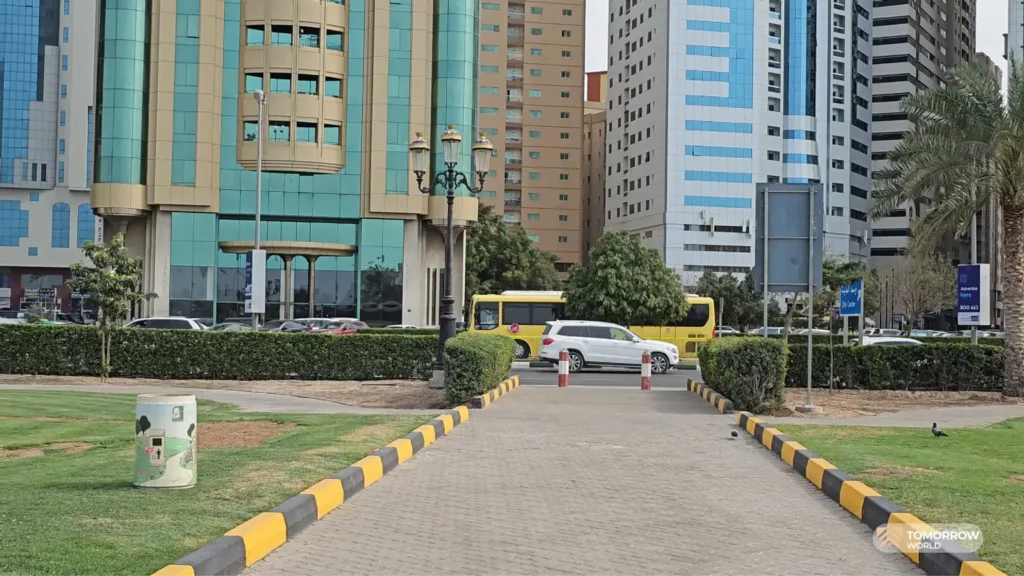
The souk sits on King Faisal Street between Al Ittihad Square and Khalid Lagoon. Save the Central Souk map pin before you leave, since the two buildings are long and the entrances face different roads.
By car
- From Dubai, take Al Ittihad Road (E11) north into Sharjah and follow signs for King Faisal Street or Al Majaz.
- Head toward Khalid Lagoon. The souk’s blue roofline is visible from the road well before you reach it.
- Park in the municipal lots on either side of the complex (see parking below).
Leave extra time on the Dubai to Sharjah stretch. Traffic between 7 AM and 9 AM and between 5 PM and 8 PM can add 30 minutes or more.
By bus from Dubai
There is no Dubai Metro line into Sharjah, so the bus is the public transport option.
- Get a Nol card with at least AED 12 on it. RTA intercity buses don’t take cash.
- Board one of the intercity routes to Al Jubail Bus Station:
- E303 from Union Square
- E306 from Al Ghubaiba
- E307 from Deira City Centre
- E307A from Abu Hail Metro Station
- E308 from Stadium Bus Station
- From Al Jubail Bus Station on the corniche, walk to the souk or take a short taxi ride.
The one-way fare is AED 12, and the journey usually takes 50 to 90 minutes depending on traffic.
By bus within Sharjah
Sharjah’s Route 3 (Rolla to Safari Mall) stops at Central Souq on its way along King Faisal Street. The fare is AED 8 in cash, or AED 6 with a Sayer card.
By taxi
Taxis are easy to find in central Sharjah, and drivers know the souk by its Arabic name, Souk Al Markazi, as well as Blue Souk. A taxi from Dubai adds an inter-emirate surcharge to the metered fare.
Parking & visitor tips
Parking around the souk is municipal paid parking, charged at the standard Sharjah rates:
| Duration | Fee |
|---|---|
| 1 hour | AED 2 |
| 2 hours | AED 5 |
| 3 hours | AED 8 |
| 5 hours (maximum per ticket) | AED 12 |
Since July 2026, Sharjah’s paid parking hours run from 8:00 AM to midnight, so evening parking near the souk is fully chargeable. Pay by SMS to 5566 (38 fils per message on top of the fee), through the Digital Sharjah app, or at the meter.
Check the sign colour before you skip paying on a Friday. Yellow-sign zones are free on Fridays and public holidays, while blue-sign zones charge every day of the week.
A few things make the visit smoother:
- Bargain on the right goods. Carpets, antiques, souvenirs and textiles have the most room to move. With gold, negotiate the making charge, not the weight price.
- Carry some cash. Larger gold and carpet shops take cards, but small souvenir stalls and cafés often prefer cash.
- Dress modestly. Sharjah expects clothing that covers the shoulders and knees in public places, and the souk is no exception.
- Ask before photographing people. The building is fair game, but shopkeepers and other shoppers, especially women, should be asked first.
- See it from the water. The best view of the facade is from across Khalid Lagoon around sunset.
Nearby places to combine
The souk sits close enough to several of Sharjah’s cultural sites to fill a half day.
- Sharjah Museum of Islamic Civilization: a few minutes from the corniche near Al Jubail Bus Station. Its building started life as a market, Souq Al Majarrah, and its design deliberately echoes the Blue Souk.
- Sharjah Art Foundation: galleries and contemporary art spaces in the Al Mureijah heritage area, a short drive away.
- Souq Al Jubail: the fresh fish, meat and produce market on the corniche, next to the bus station.
- Sharjah Corniche: a short walk from the souk, good for an evening stroll.
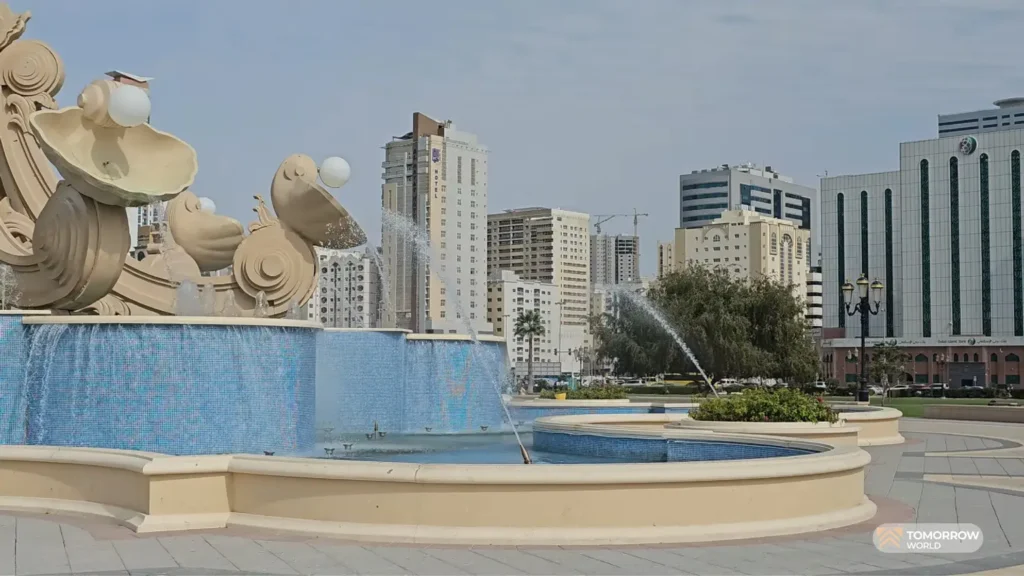
- Al Majaz Waterfront: across Khalid Lagoon, with cafés, a lagoon promenade and the fountain shows.
FAQ
Is the Central Souk the same as the Blue Souk?
Yes. Central Souk, Blue Souk, Central Souq and Souk Al Markazi are all names for the same market on King Faisal Street in Sharjah.
Is there an entry fee for the Blue Souk?
No. Entry is free, and you only pay for what you buy.
Is the Blue Souk open in the afternoon?
Most shops close between 1:00 PM and 4:00 PM, Saturday to Thursday, and from noon to 4:00 PM on Friday. Plan for the morning or the evening session.
Can you bargain at the Central Souk?
Yes. Bargaining is expected on carpets, antiques, textiles and souvenirs. For gold, the weight price follows the daily market rate, and the making charge is the part you can negotiate.
Which floor has the carpets & antiques?
The upper floor. Carpets, kilims, pashminas, antiques and handicrafts are concentrated there, while the ground floor carries gold, watches, clothing and perfume.
How do you get to the Blue Souk from Dubai by bus?
Take RTA intercity route E303, E306, E307, E307A or E308 to Al Jubail Bus Station in Sharjah, paying AED 12 with a Nol card. The souk is a short walk or taxi ride from the station.
Planning your visit
- Go between 9 AM and 1 PM for quiet browsing, or after 4 PM for the full range of shops. Avoid the 1 PM to 4 PM gap.
- Drive, or catch an RTA intercity bus to Al Jubail with AED 12 on a Nol card.
- Budget for parking until midnight, and read the sign colour if you visit on a Friday.
- Head to the lagoon-side ground floor for gold and the upper floor for carpets and antiques.
- Bring cash for small stalls, and negotiate on everything except the weight price of gold.






4 Comments