City of Gold Dubai: Why Dubai Earned the Name & Where Its Gold Trade Happens
Dubai is called the City of Gold because it sits at the centre of the world’s physical gold trade without owning a single mine. Gold arrives from mines in Africa and beyond, is refined, stored and traded in the city, then moves on to buyers in India, the wider Middle East and other markets.
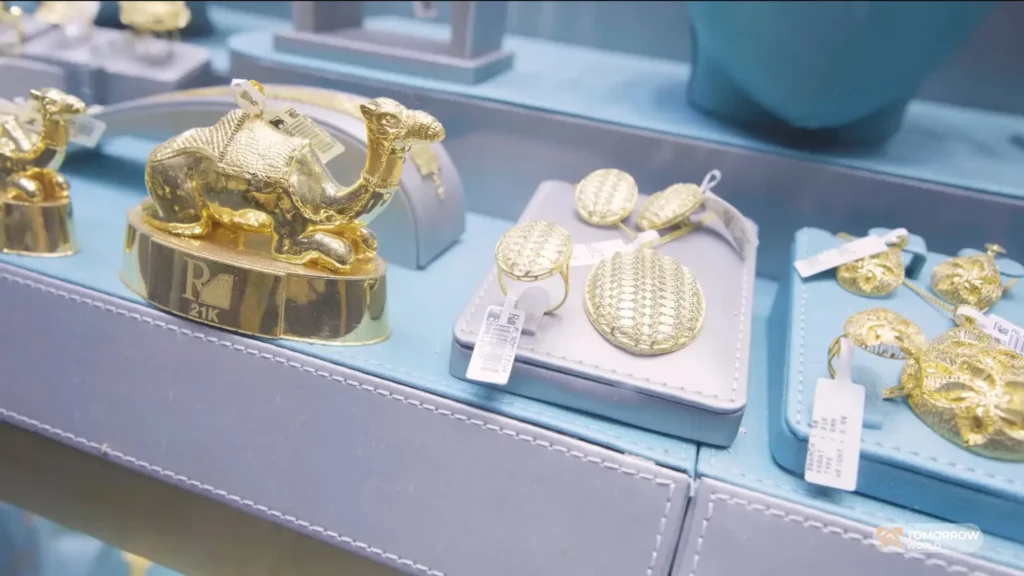
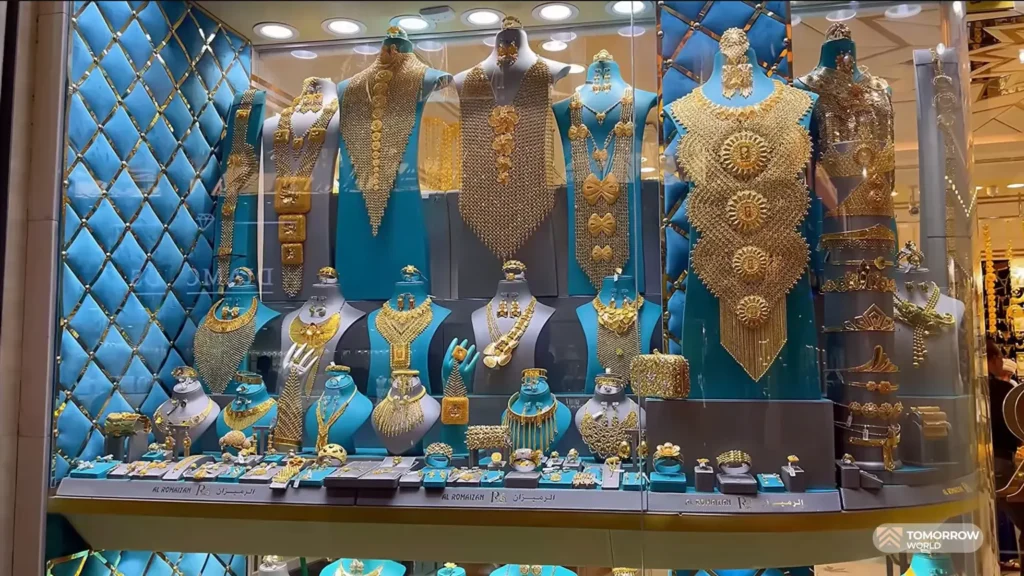
The retail side is what most visitors see: the Gold Souk in Deira, mall jewellers, and since January 2026 a purpose-built gold district. Behind those shop windows sit refineries, vaults, a commodities exchange and a municipal laboratory that tests the purity of what is sold.
Dubai gold market overview
| Detail | Fact |
|---|---|
| Global ranking | Second-largest physical gold trading hub, after Switzerland |
| Physical gold traded (UAE, 2025) | About 2,750 tonnes |
| Dubai foreign gold trade (2025) | About AED 1 trillion, up 60% on 2024 |
| Best-known retail market | Gold Souk, Al Ras, Deira (more than 300 shops) |
| Newest gold destination | Dubai Gold District, Deira (launched January 2026) |
| Exchange | Dubai Gold & Commodities Exchange (DGCX), trading since November 2005 |
| Purity testing | Dubai Central Laboratory, part of Dubai Municipality |
| Daily retail rates | Set by the Dubai Jewellery Group |
| VAT on jewellery | 5% of the full invoice |
| VAT on investment bars and coins | 0% at 99% purity or higher |
How Dubai became the City of Gold
Dubai’s gold story began with India’s import controls. After independence, India restricted gold imports and private holdings, and the same metal could sell in India for close to double its Dubai price. Dubai merchants shipped gold across the Arabian Sea by dhow, and by the 1960s the city was a major gold trading centre.
Several events then turned a re-export business into a global hub:
- Creek dredging, 1959 to 1961. Widening Dubai Creek let larger vessels dock in Deira, next to the merchants’ shops.
- Oil, from 1966. Oil revenue paid for ports, airports and the infrastructure that trade depends on.
- Lebanon’s civil war, from 1975. Beirut had been the region’s gold centre, and traders moved to Dubai for stability.
- India’s liberalisation in the 1990s. Legal imports opened up, and thousands of Indian jewellers set up in Dubai. The decade became the height of the city’s gold boom.
- Dubai Shopping Festival, 1996. Gold promotions made the city a destination for jewellery shoppers. The same year, the trade body now known as the Dubai Jewellery Group was formed to represent the industry.
- DMCC and DGCX, 2002 to 2005. The Dubai Multi Commodities Centre built the wholesale side, and its exchange began trading in November 2005 as the first derivatives exchange in the Middle East.
The scale today is far beyond the souk. The UAE’s physical gold trade reached about 2,750 tonnes in 2025, which placed the country second in the world among physical trading hubs.
Where Dubai’s gold trade happens today
The city’s gold trade runs through five distinct places. Each serves a different buyer.
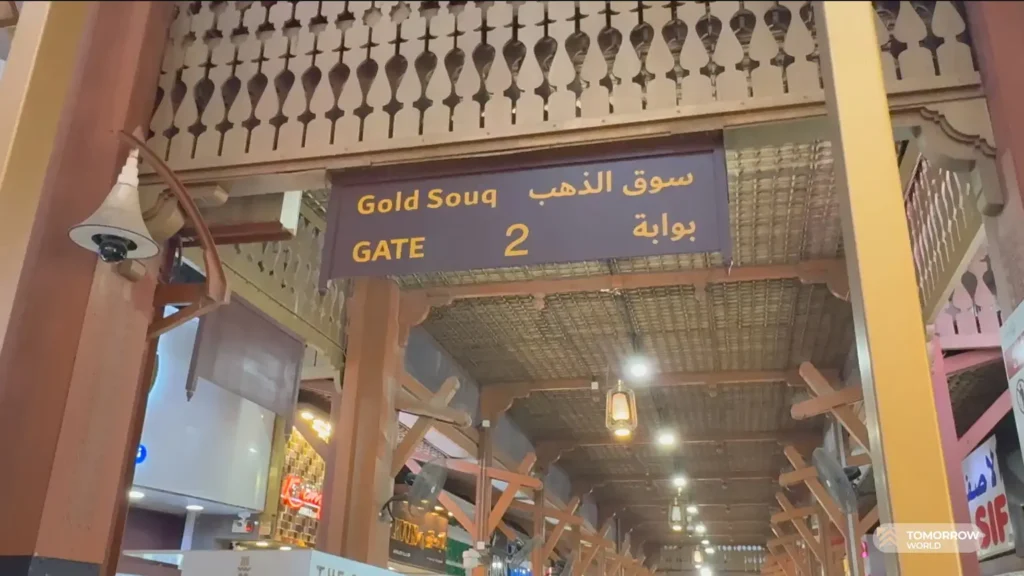
Gold Souk in Deira
The Gold Souk is a covered market in Al Ras, Deira, on the north bank of Dubai Creek, with more than 300 shops. Merchants started trading here in the early 20th century, and it remains the place most people mean when they say Dubai’s gold market.
- Best for: traditional 22K and 21K jewellery, heavy wedding sets, comparing many shops in one walk.
- Downside: crowded at peak hours, and the price you pay depends on how well you negotiate making charges.
- Getting there: Al Ras and Gold Souq stations on the Metro Green Line, or an abra across the creek from Bur Dubai.
Dubai Gold District
Ithra Dubai launched Dubai Gold District on 27 January 2026. It connects the historic souk to a new development in Deira with more than 1,000 retailers across gold, jewellery, perfume, cosmetics and lifestyle, plus bullion and wholesale businesses. A “Gold Street” built using gold is planned as its centrepiece.
Gold & Diamond Park
Gold & Diamond Park is an Emaar-run complex on Sheikh Zayed Road in Al Quoz, beside Equiti Metro Station on the Red Line. It has around 95 shops and free parking.
- Best for: diamond jewellery, modern 18K designs, and custom or remodelled pieces from on-site workshops.
- Downside: a smaller selection of heavy traditional gold than the souk.
Mall jewellers
Large chains have showrooms in Dubai Mall, Mall of the Emirates and most other major malls. Prices are tagged and making charges are largely fixed, though chains cut them sharply during Dubai Shopping Festival, Diwali and Eid promotions. Gold in a mall shop meets the same hallmark and karat rules as gold in the souk.
DMCC & the wholesale market
Most of the tonnage never reaches a shop counter. DMCC, the free zone in Jumeirah Lake Towers, hosts refiners, bullion traders and vaults, and DGCX offers gold futures and Shari’ah-compliant spot gold contracts. Regulation of gold imports, refining and re-export sits with the federal Ministry of Economy.
How gold is priced in Dubai
The Dubai Jewellery Group publishes suggested retail rates per gram for 24K, 22K, 21K, 18K and 14K gold several times a day, tracking the international spot price. Member shops show them on electronic price boards, so the metal rate is the same across the city on any given session.
What changes from shop to shop is the making charge. A jewellery price is built like this:
- Gold value: weight in grams × the day’s rate for that karat.
- Making charge: the labour and design fee, charged per gram or as a flat amount.
- VAT: 5% on the total of both.
Say a 10-gram 22K chain is priced at a board rate of AED 450 per gram with AED 300 in making charges. The gold value is AED 4,500, the subtotal is AED 4,800, and VAT brings the bill to AED 5,040. Simple machine-made chains and bangles carry the lowest making charges, and intricate handwork carries the highest.
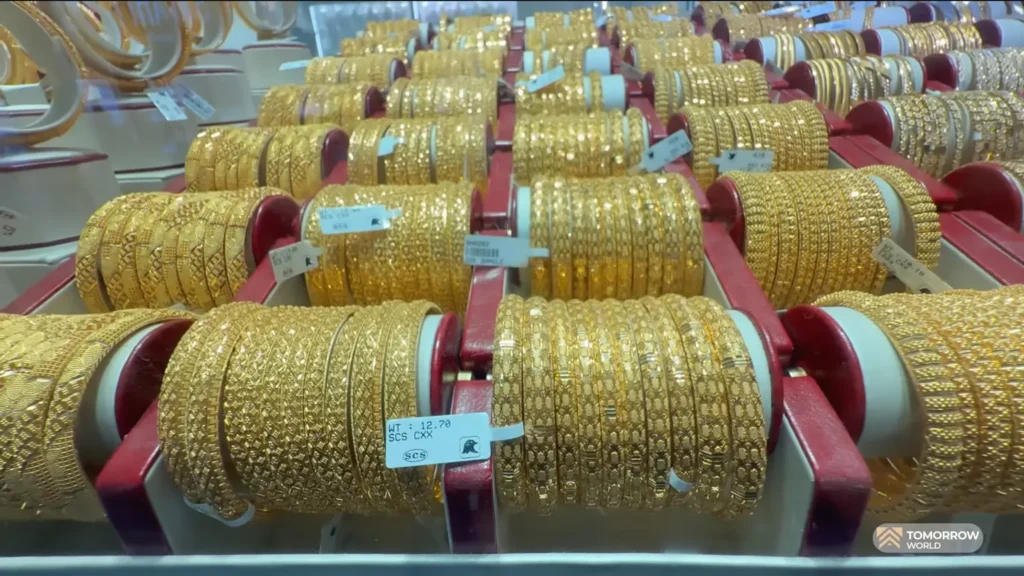
Purity marks & hallmarking
Every piece of gold sold legally in Dubai carries a hallmark approved by the Dubai Central Laboratory. The stamp shows the karat, the manufacturer’s mark and a certification number. Inspectors visit shops unannounced, take blind samples for lab testing and calibrate shop scales.
| Karat | Purity | Hallmark stamp | Typical use |
|---|---|---|---|
| 24K | 99.9% | 999 | Bars and coins; too soft for daily-wear jewellery |
| 22K | 91.6% | 916 | Traditional South Asian and Arabic jewellery |
| 21K | 87.5% | 875 | Gulf-style jewellery, more durable than 22K |
| 18K | 75.0% | 750 | Diamond-set and modern designs, white and rose gold |
| 14K | 58.3% | 585 | Lightweight everyday pieces |
The 14K rate is the newest. The Dubai Jewellery Group began publishing it in late 2025 as record gold prices pushed shoppers toward lower karats. In October 2025, Dubai Municipality also unveiled a self-service purity testing machine, with the first unit allocated to the Gold Souk.
VAT, tourist refunds & customs limits
| Rule | What applies |
|---|---|
| Gold jewellery | 5% VAT on the whole invoice, gold value and making charges together |
| Investment bars and coins | 0% VAT when 99% pure or higher and tradable on global bullion markets |
| Tourist VAT refund | Non-residents aged 18 and over, purchases of AED 250 or more at Planet-registered shops, validated at departure within 90 days |
| Leaving the UAE with gold | Declare cash, jewellery and precious metals worth more than AED 60,000 in total |
Tourists should ask for a tax-free tag at the till, since the refund is processed electronically through Planet at the airport. Travellers over the AED 60,000 threshold file the declaration in advance on the Afseh declaration portal or the Afseh app. Undeclared valuables above the limit can be fined or confiscated.
Exchange & resale rules
Most Dubai jewellers do not give cash refunds on gold. Exchanges are usually allowed within a short window if the piece is unworn and comes with its original invoice, and shops often deduct making charges and stone weight when recalculating its value.
When you sell gold back, the shop pays its buying rate for the karat, which sits below the selling rate, and making charges are not returned. That makes heavy, low-making-charge pieces the better choice if resale value matters to you.
Mistakes that cost buyers money
- Accepting the first making-charge quote. In the souk, making charges are negotiable. The gold rate is not.
- Comparing total prices instead of the breakdown. Two pieces of the same weight can differ by hundreds of dirhams in making charges alone.
- Buying intricate designs for investment. You pay VAT on the making charge and lose it at resale.
- Leaving without an itemised invoice. It should list the date, shop name, weight, karat, gold value, making charges and VAT.
- Buying jewellery and expecting 0% VAT. The zero rate covers investment bars and coins only.
FAQ
Why is Dubai called the City of Gold?
Dubai built its gold trade on re-exports to India from the 1960s and grew into the second-largest physical gold trading hub in the world. The UAE traded about 2,750 tonnes of physical gold in 2025, and Dubai’s Gold Souk is one of the largest retail gold markets anywhere.
Is gold cheaper in Dubai?
The metal is priced close to the international spot rate, and margins in Dubai’s trade are tight. The saving depends on making charges, so simple, heavy pieces bought outside promotion periods usually give the best value per gram.
Is gold in the Gold Souk real?
Yes, when bought from a licensed shop. Every piece must carry a Dubai Central Laboratory hallmark, and shops are inspected unannounced. Check the stamp and ask for an itemised invoice.
Which karat should I buy in Dubai?
Choose 22K for traditional jewellery that holds resale value, 18K for diamond-set or everyday pieces that need durability, and 24K bars or coins if the goal is investment at 0% VAT.
What is the Dubai Gold District?
It is a gold and jewellery destination in Deira launched by Ithra Dubai in January 2026. It links the historic Gold Souk to more than 1,000 retailers and bullion and wholesale businesses, with a planned Gold Street at its centre.
Before you buy gold in Dubai
- Check the day’s Dubai Jewellery Group rate for your karat before entering any shop.
- Decide whether you want jewellery or investment gold, since VAT and resale differ sharply between them.
- Compare making charges at two or three shops, and negotiate in the souk.
- Inspect the hallmark and watch the piece weighed on a zeroed scale.
- Get an itemised invoice and, as a tourist, a tax-free tag for the VAT refund.
- Total your gold, jewellery and cash before flying, and declare anything above AED 60,000.